Air Conditioning Sickness Symptoms: How is it Different from a Cold? Causes and Prevention
Prolonged use of air conditioners during the summer can make your body feel chilly and lead to headaches or fatigue. This is commonly known as air conditioning sickness, primarily caused by significant indoor-outdoor temperature differences and extended exposure to cooled environments.
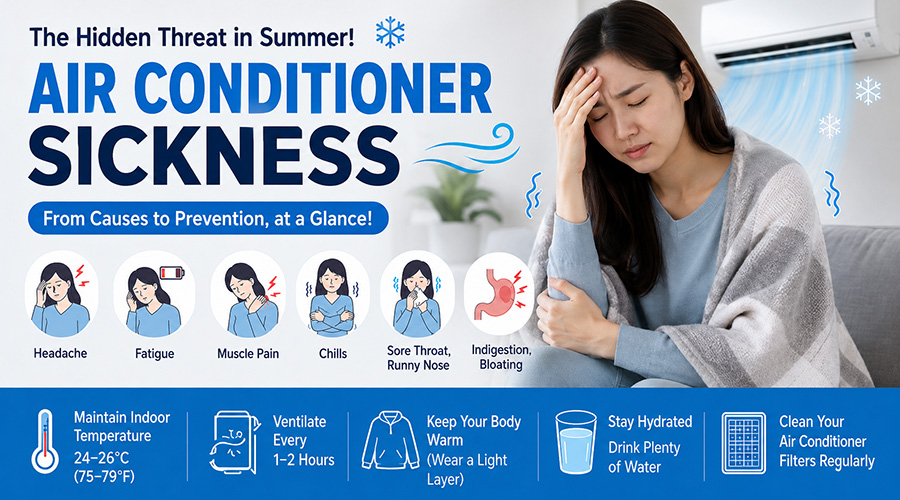
What is Air Conditioning Sickness?
Air conditioning sickness is not a formal medical diagnosis but refers to a variety of physical symptoms that appear when exposed to an air-conditioned environment for a long time. When the temperature difference between indoors and outdoors is large, our body's temperature regulation system fails to function properly, leading to various issues.
Common Symptoms of Air Conditioning Sickness
Air conditioning sickness is similar to a cold, but the causes are different, and several symptoms can appear simultaneously.
| Symptom | Description |
|---|---|
| Headache | Occurs due to prolonged exposure to cold air |
| Fatigue | Feeling easily exhausted and lethargic |
| Muscle Aches | Stiffness in the shoulders, neck, and lower back |
| Chills | Feeling cold and shivering |
| Runny Nose & Sneezing | Respiratory symptoms similar to a cold |
| Indigestion | Gastrointestinal issues such as stomach pain or diarrhea |
Causes of Air Conditioning Sickness
The biggest cause is the temperature difference between the indoors and outdoors. Setting the air conditioner to excessively low temperatures or staying in a cooled room for a long time can cause blood vessels to constrict and disrupt the balance of the autonomic nervous system.
- An indoor-outdoor temperature difference of 5~7℃ or more
- An environment where cold wind blows directly on you
- Poorly ventilated indoor spaces
- Exposure to bacteria and mold from contaminated AC filters
- Fatigue and lack of sleep
Differences Between a Cold and Air Conditioning Sickness
| Category | Air Conditioning Sickness | Cold |
|---|---|---|
| Cause | Indoor/outdoor temperature difference | Viral infection |
| Fever | Rare | Common |
| Symptoms | Fatigue, muscle aches, chills | Cough, sore throat, fever |
| Recovery | Improves quickly when the environment is adjusted | Lasts for several days or more |
How to Prevent Air Conditioning Sickness
You can easily prevent air conditioning sickness just by improving your daily habits.
- Maintain an indoor temperature of 24~26℃
- Keep the temperature difference with the outdoors within 5~7℃
- Ventilate the room every 1 to 2 hours
- Avoid direct exposure to the air conditioner's cold wind
- Drink plenty of water to stay hydrated
- Maintain your body temperature by wearing a light cardigan or jacket
- Clean the air conditioner filters regularly
If your symptoms are severe or accompanied by a high fever, shortness of breath, or a severe cough, it might not be simple air conditioning sickness, and you should seek medical attention.
Frequently Asked Questions (FAQ)
Is air conditioning sickness the same disease as a cold?
No. Air conditioning sickness is a set of symptoms caused by the temperature difference between indoors and outdoors, and its cause is different from a cold, which is a viral infection.
How long does air conditioning sickness last?
It usually improves within 2 to 3 days. Adequate rest and managing your body temperature are highly beneficial.
What is the optimal AC temperature to prevent air conditioning sickness?
It is best to maintain an indoor temperature of 24~26℃ and keep the temperature difference with the outdoors within 5~7℃.
Conclusion
Anyone can experience air conditioning sickness during the summer, but it can be prevented simply by maintaining appropriate indoor temperatures, ventilating the room, and staying hydrated. Rather than automatically assuming you have a cold when similar symptoms appear, it is important to check your air conditioning environment first.