Summer Food Poisoning Prevention: Essential Guidelines You Must Know
During summer, high temperatures and humidity cause food to spoil quickly and bacteria to multiply rapidly. Practicing simple daily habits can significantly lower the risk of food poisoning. Be sure to check the prevention guidelines below.
Why Food Poisoning Increases in Summer
High temperatures and humidity in the summer create optimal conditions for bacteria and viruses to multiply exponentially. In particular, pathogens such as Salmonella, pathogenic E. coli, and Staphylococcus aureus can proliferate rapidly within food, requiring extra caution.
Furthermore, increased outdoor activities, camping trips, and food delivery services often lead to food being left exposed to room temperature for extended periods, further elevating the risk of foodborne illnesses.
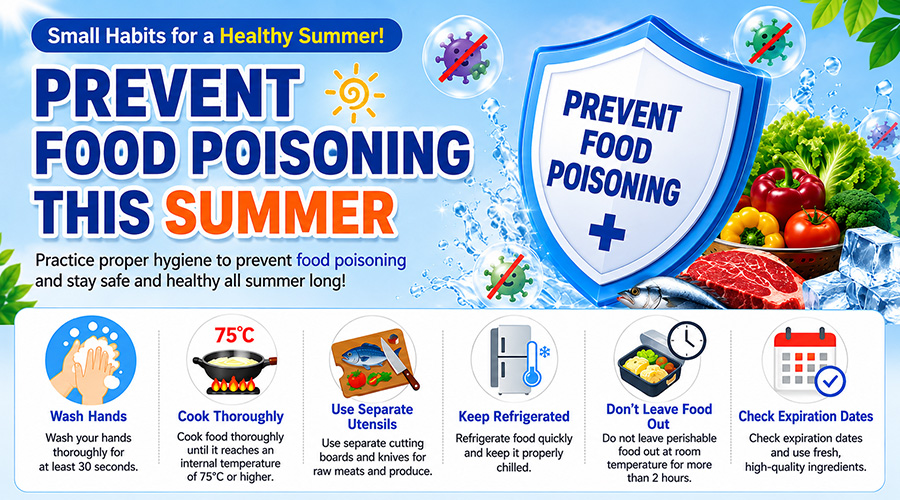
6 Core Rules for Food Poisoning Prevention
1. Wash Hands Thoroughly for at Least 30 Seconds
Always wash your hands thoroughly with soap under running water for at least 30 seconds before preparing food, before eating, and after using the restroom.
2. Cook Food Thoroughly
Ensure that meat, poultry, eggs, and seafood are cooked completely to the center before consumption.
3. Keep Raw and Cooked Foods Separate
Use separate cutting boards and knives for raw ingredients and cooked foods to prevent cross-contamination.
4. Maintain Strict Refrigeration Practices
Cool cooked food as quickly as possible before refrigerating, and avoid leaving refrigerator doors open for prolonged periods.
5. Do Not Leave Food at Room Temperature
Perishable items such as prepared lunches, sandwiches, sushi, raw fish, and salads should not be left at room temperature. Use ice packs or insulated cooler bags when traveling.
6. Always Check Expiration and Use-By Dates
Even if an item does not smell or look unusual, it is safest to discard food that has exceeded its recommended storage period.
Food Storage Guidelines by Food Type
| Food Type | Storage Method |
|---|---|
| Meat & Poultry | Refrigerate or freeze immediately after purchase. |
| Fish & Seafood | Consume on the day of purchase if possible; never leave at room temperature. |
| Packed Lunches & Prepared Foods | Do not keep at room temperature for more than 2 hours. |
| Leftovers | Store in airtight containers in the refrigerator and reheat thoroughly before eating. |
| Fruits & Vegetables | Wash thoroughly under clean running water before refrigerating. |
Symptoms and First Aid Measures
Common symptoms of food poisoning include abdominal pain, diarrhea, vomiting, nausea, and fever. Most mild cases improve with sufficient fluid intake and rest. However, if symptoms are severe or accompanied by high fever, bloody stool, or severe dehydration, seek immediate medical attention.
Vulnerable groups—such as young children, the elderly, pregnant women, and individuals with chronic medical conditions—are at higher risk of dehydration and complications, so caution is advised even with mild symptoms.
Frequently Asked Questions (FAQ)
Why does food poisoning occur more frequently in the summer?
Hot and humid environmental conditions allow bacteria and viruses to multiply rapidly, greatly increasing the risk of food poisoning.
How soon should cooked food be refrigerated?
Cooked food should be cooled down as quickly as possible and refrigerated within 2 hours. In warm summer temperatures, prompt refrigeration is even more critical.
Can I take anti-diarrheal medication if I experience food poisoning symptoms?
Depending on the underlying cause, over-the-counter anti-diarrheals may delay the body's natural elimination of toxins. Maintain hydration and consult a healthcare professional if symptoms persist or worsen.
Conclusion
Most summer food poisoning cases can be prevented by adhering to basic habits: thorough handwashing, proper cooking temperatures, rapid refrigeration, and hygienic preparation. On hot summer days when food spoils easily, discarding anything with an off odor or taste is the safest choice for protecting your health.